
The endocannabinoid system
Learn the system. Shop the feeling.
This page now covers the ECS, the major cannabinoids, and the research story behind why this category exists in the first place. It is written to feel clear and premium, not clinical and bloated.
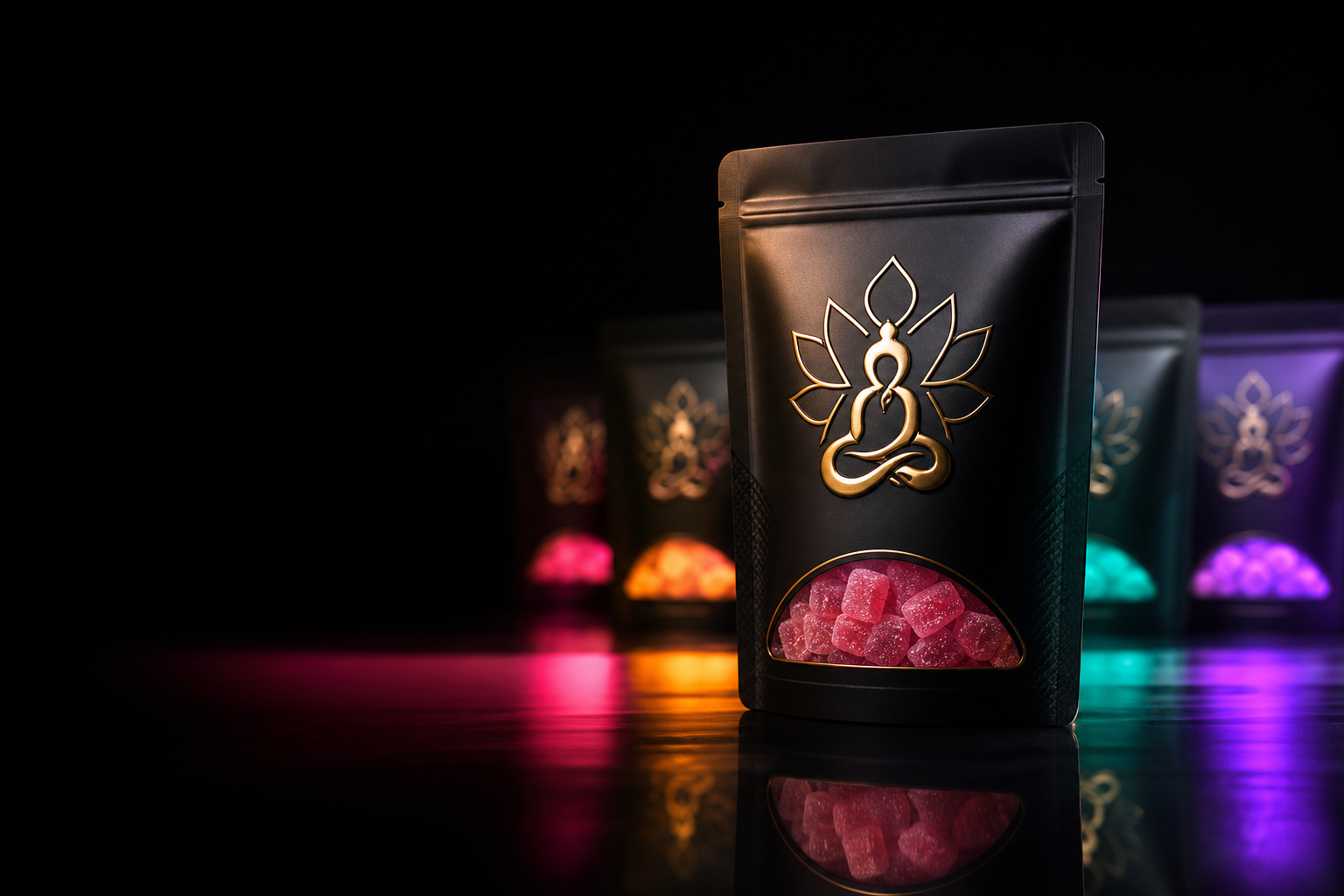
Your body already speaks this language.
The endocannabinoid system is a signaling network that helps regulate balance across mood, stress response, appetite, memory, sleep, and more. Two best-known internal cannabinoids are anandamide and 2-AG.
Think of it as a balancing system, not a single mood button. Cannabis compounds can interact with that system in different ways, which is part of why products can feel different.
CB1 + CB2, without the science-class overload.
CB1 is heavily discussed in the brain and central nervous system. THC is the cannabinoid most associated with the classic psychoactive experience.
CB2 shows up in the broader peripheral and immune conversation. Not every cannabinoid story is only about getting higher.
THC
The lead cannabinoid and the main driver in the edible feel.
CBD
The smoother that helps round things out.
CBG
The brighter, daytime support player.
CBN
The deeper night-mode support player.
CBC
A quieter background layer inside a broader blend.
THCV
A sharper, uplift-oriented compound in more active profiles.
The research timeline matters.
What feels established vs what is still being studied.
- THC is still the main psychoactive driver in most edible experiences.
- CBD is widely discussed as a balancing or softening support compound.
- Minor cannabinoids like CBG, CBN, CBC, and THCV are promising, but the evidence base is thinner than the public hype suggests.
- The ECS reaches beyond just one receptor or one effect, which is why formulation should stay intentional and realistic.
Research-informed. Feeling-first.
Every vibe is built around a signature special blend designed to support the mood of the moment. That means brighter blends for daytime energy, smoother blends for social flow, mellower blends for wind-down moments, and deeper blends for end-of-night mode.
We keep the public site feeling-first and design-led instead of dumping internal ratio detail into the brand experience.